
On what would have been her 104th birthday, we celebrate Dorothy Dandridge for the beauty, brilliance, versatility, and unforgettable performances she gave the world.
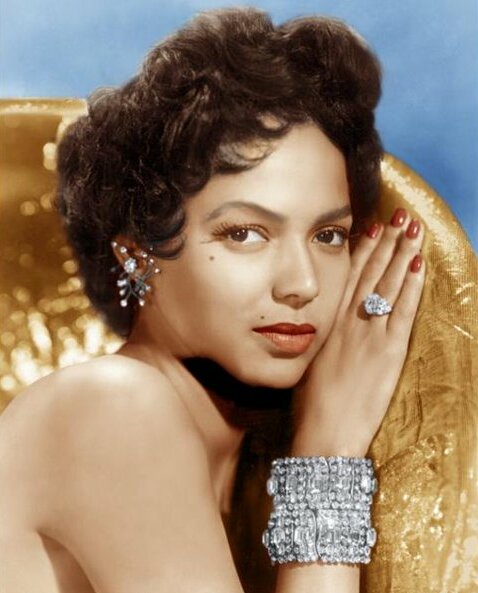
There are certain faces that seem to belong to the golden age of Hollywood. Elegant, expressive, impossibly photogenic, and possessed of a glamour that somehow survives every change in fashion.
Dorothy Dandridge had one of those faces.
With her luminous smile, remarkable poise, and effortless screen presence, she looked every inch the movie star. She could wear a glamorous evening gown as convincingly as Marilyn Monroe or Ava Gardner, command a nightclub stage, and make the most of a dramatic close-up.
But Dandridge was considerably more than a beautiful woman.
She was a gifted actress, singer, dancer, and entertainer who spent decades developing her craft. She could be playful, tender, spirited, sophisticated, sensuous, and emotionally compelling. Her versatility was evident long before Hollywood finally acknowledged her potential as a leading lady.
Born on November 9, 1922, in Cleveland, Ohio, Dandridge became one of the most recognizable Black actresses of the twentieth century. She achieved milestones that helped broaden the possibilities for generations of performers who followed.
Her career wasn’t always easy, and her personal life contained more than its share of sorrow. But today, on her birthday, I’d rather celebrate Dorothy Dandridge the artist, the star, and the woman whose talents deserved to shine.
Before Hollywood Stardom, Dorothy Dandridge Was a Born Entertainer
Dorothy’s performing career began when she was still a child.
Alongside her older sister Vivian, she appeared in an act originally known as the Wonder Children. The sisters later became part of the Dandridge Sisters, a singing and dancing trio that performed in prestigious venues, including New York’s famous Cotton Club.
It was an invaluable education in show business.
Long before audiences came to associate her with dramatic film roles, Dandridge had learned how to hold a crowd’s attention through music, movement, timing, and personality.
Throughout the 1930s and 1940s, she appeared in musical films and specialty performances, often in brief sequences that allowed her talents to be seen without giving her a substantial character to play.
Those early appearances are worth revisiting, particularly for viewers familiar only with her later work.
There is a youthful vivacity to her performances, an ease with music and dance that reminds us she wasn’t simply a dramatic actress who happened to be beautiful. She was an all-around entertainer.
Her nightclub career would become equally important. Dandridge developed into a sophisticated solo performer, appearing in prominent venues and captivating audiences with her singing, beauty, and stage presence.
She belonged to that wonderfully versatile generation of entertainers who could move between film, music, dance, and live performance.
And she did it with style.
Bright Road: A Softer Side of Dorothy Dandridge
For BGS readers seeking a gentler introduction to Dorothy’s filmography, I would particularly recommend looking into Bright Road (1953).
Dandridge plays Jane Richards, a dedicated elementary schoolteacher who becomes determined to help a troubled student discover his potential.
Harry Belafonte appears as the school principal, and the film follows the challenges and rewards of teaching within a predominantly Black community.
What makes Bright Road particularly interesting is its relative simplicity.
This isn’t a grand tragedy or an extravagant melodrama about forbidden desire. It’s an intimate story about education, compassion, patience, and the everyday relationships that shape a child’s life.
Dandridge’s performance is warm, intelligent, and appealingly understated. She portrays a woman whose professional commitment and personal sensitivity are at the heart of the narrative.
It’s also a lovely reminder of the kinds of roles Black actresses could have played more frequently if Hollywood had offered them a wider range of stories.
A talented young professional navigating the joys and frustrations of her work shouldn’t have been an unusual opportunity for a Black leading lady. And yet, in 1953, it was.
Bright Road deserves more recognition, not merely as a historical curiosity, but as an example of Dandridge’s ability to carry a thoughtful, human-scale story.
For BGS, its emphasis on a Black woman’s professional life, compassion, and personal agency makes it especially worthwhile.
Carmen Jones: A Star Steps Into the Spotlight
Of course, no celebration of Dorothy Dandridge would be complete without Carmen Jones (1954).
The musical drama, adapted from Oscar Hammerstein II’s stage production inspired by Georges Bizet’s opera Carmen, features an all-Black cast headed by Dandridge and Harry Belafonte.
Dandridge plays Carmen, a beautiful, fiercely independent woman whose romantic entanglements lead to devastating consequences.
It was the performance that transformed her into an internationally recognized star.
And what a transformation it was.
Coming directly after her gentle schoolteacher role in Bright Road, Dandridge embraced a character who was almost its complete opposite.
Carmen is bold, flirtatious, defiant, magnetic, and determined to live according to her own desires. Dandridge gives her tremendous presence, holding the screen with a confidence that makes it easy to understand why the people around her become so fascinated.
The film also showcases the glamorous visual possibilities of a major Hollywood production built around Black performers. Its elaborate costumes, music, and dramatic staging offered Dandridge a level of cinematic prominence that had too rarely been available to Black actresses.
Her performance earned her a nomination for the Academy Award for Best Actress, making her the first Black woman ever nominated in that category.
It was an extraordinary achievement.
The film itself is tragic, and its portrayal of Carmen raises questions about the kinds of sexually assertive Black female characters Hollywood was most willing to celebrate. Those questions deserve serious discussion, particularly on a site like BGS.
But they shouldn’t obscure the artistry of the woman who brought Carmen to life.
Dandridge demonstrated extraordinary range, moving from quiet tenderness to commanding sensuality and dramatic intensity within the space of two consecutive starring roles.
If Hollywood needed proof that she could be a leading lady, she had provided it.
The Glamour of Dorothy Dandridge
One of the pleasures of revisiting Dorothy Dandridge’s career is simply appreciating her remarkable sense of style.
She was a classic Hollywood beauty, with an elegance and sophistication that made her a natural subject for studio portraits and magazine photographs.
The gowns, jewelry, carefully arranged hairstyles, and polished makeup are a visual feast for anyone who loves vintage glamour.
But her appeal wasn’t limited to her wardrobe.
Dandridge had an expressive face and a distinctive combination of refinement and warmth. Her smile could be dazzling, while a change in expression could convey uncertainty, amusement, longing, or resolve.
She understood how to command attention without appearing to demand it.
It’s easy to see why her photographs remain so captivating decades later.
And there’s particular significance in remembering her as a glamour icon.
For much of Hollywood’s history, Black women were denied the same opportunities to be presented as elegant, desirable, sophisticated leading ladies as their white contemporaries.
Dandridge challenged those limitations simply by appearing on screen with all the allure, beauty, and charisma of a major star.
She looked as though she belonged among Hollywood royalty.
Because she did.
Exploring Her Other Films
Although Carmen Jones remains her signature performance, Dandridge’s filmography offers several other works worth discovering.
In The Harlem Globetrotters (1951), she plays Ann Carpenter in a sports-centered story that offers an early glimpse of her potential as a romantic leading lady.
Island in the Sun (1957) places her within a star-studded ensemble exploring relationships and racial tensions in the Caribbean. Her role as Margot Seaton gives her another opportunity to portray a woman navigating attraction and social expectations, although the film’s handling of race and romance reflects the limitations and controversies of its era.
In The Decks Ran Red (1958), she appears in a suspenseful maritime drama, a welcome reminder that her work extended beyond musicals and conventional romantic stories.
Then there is Porgy and Bess (1959), a lavish musical adaptation in which Dandridge portrays Bess opposite Sidney Poitier.
The performance earned her a Golden Globe nomination, further demonstrating her dramatic abilities.
Like Carmen Jones, Porgy and Bess contains difficult material and has generated substantial debate over its representation of Black life. It is not necessarily the sort of uplifting entertainment BGS generally prioritizes, but it remains a significant part of Dandridge’s career.
What emerges from even a brief examination of these films is the versatility of an actress who could have inhabited so many different fictional worlds.
Romantic comedy, sophisticated mystery, domestic drama, adventure, musical fantasy—it’s easy to imagine Dandridge flourishing in all of them.
The Leading Lady Who Helped Open Doors
Dorothy Dandridge’s historical importance extends far beyond a single Oscar nomination.
Her success challenged the idea that Black actresses could not command the attention of mainstream movie audiences as glamorous, multidimensional leading ladies.
She helped make visible possibilities that Hollywood had long been reluctant to explore.
Yet it’s important to remember that her achievements weren’t inevitable.
She developed her craft over many years, sought opportunities beyond the limited roles available to her, and pursued the sort of career she knew her talents could sustain.
The entertainment industry often celebrated her beauty while struggling to imagine enough substantial roles for her.
That contradiction makes her accomplishments all the more remarkable.
But I’d rather not remember her solely as a woman who suffered because Hollywood failed her; I’d like to remember her as someone who succeeded brilliantly when given the chance.
The legacy of Dorothy Dandridge is not simply that doors were closed to her — it’s that she demonstrated exactly why they should have been opened.
A Star Whose Light Still Shines
More than six decades after her death, Dorothy Dandridge remains a captivating figure.
Her photographs are timeless, and her performances continue to attract new audiences. Her name occupies an important place in discussions of Black film history, classic Hollywood glamour, and the changing possibilities for women of color on screen.
In 1999, Halle Berry portrayed her in the acclaimed HBO film Introducing Dorothy Dandridge, bringing renewed attention to her life and work.
Just a few years later, Berry became the first Black woman to win the Academy Award for Best Actress.
During her acceptance speech, Berry acknowledged Dandridge among the women who had helped make that moment possible.
It was a moving recognition of an artistic legacy that had endured long after its creator was gone.
And yet, I hope future generations discover Dandridge for more than the barriers she faced or the sadness surrounding her final years.
I hope they see the vivacious young performer dancing with the Dandridge Sisters, the compassionate schoolteacher of Bright Road, the magnetic star of Carmen Jones. The elegant woman whose portraits still embody the finest traditions of classic Hollywood glamour.
I hope they appreciate her voice, her talent, her ambition, and her remarkable ability to hold an audience’s attention.
Most of all, I hope they remember that Dorothy Dandridge was a great deal more than a tragic Hollywood biography.
She was an artist.
A trailblazer.
And she was a star.
Happy 104th birthday, Dorothy Dandridge. Your brilliance deserves to be celebrated.